Trend Tuesday: When the Best AI Models Are No Longer Available
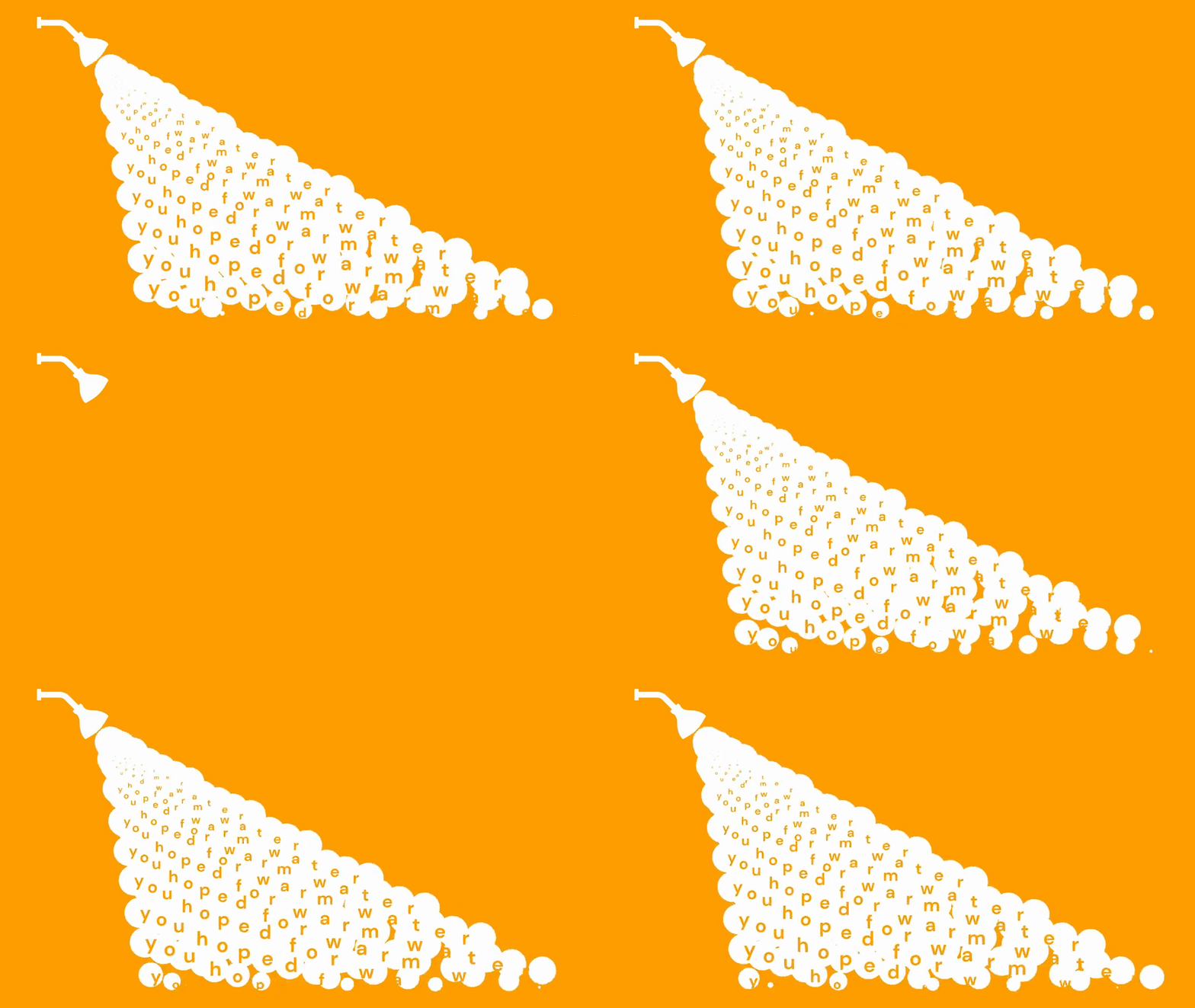
Art by @basilonmypizza: https://lnkd.in/eF8FkWzN - https://basilhefti.ch/
I guess you know the feeling: you stand under a nice warm shower, and suddenly the water stops.
Annoying to say the least. And very noticeable.
This is roughly what happened this week when access to one of the most modern AI models was limited.
It marks a clear trend: the more useful AI models become, the more their access gets protected.
Because AI models have become part of daily work, restricted access has direct economic effects.
Those with access can explore better energy storage, better medicine, better materials. And faster discovery translates into earlier revenue.
The same in operations: without access, efficiency gains arrive later. So does risk detection: off-spec products, field quality issues, or patterns in customer complaints simply take longer to identify.
In other words: access to AI is starting to look like access to infrastructure. Whoever controls the tap influences who can keep working, improving, and competing.
So what can the affected do? Several strategies exist, in increasing difficulty.
One: redundancy. Do not rely on a single model provider.
Two: local models. Today, even a laptop can run an AI model. Open-weight models are slower and less capable than the largest models we use daily. Nevertheless, they work. I use them regularly when data protection is key.
Three: build local capability to build AI models. Training a GPT-2-like system on Shakespeare is a manageable first step. Reaching the level of the most modern models is a different matter, not least because of the data required.
Usually, the shower water returns after a while. With AI models, I expect the same.
The trend is clear: the fight for advantage with modern AI models has only started.
AI access has become a business continuity topic.
What redundancy have you built into your AI model service provisioning?